A Practical Sketchbook Routine for Daily Observation
Why a routine matters
Developing observational skill is less about dramatic progress and more about repeated, modest acts. A routine lowers friction: it reduces the decisions you must make each time you sit down and increases the odds that drawing will happen. The aim is to create a sequence that fits your life and nudges you toward attentive looking.
Keep it short and specific
Start with a constrained time block. Fifteen to thirty minutes is long enough to notice patterns and short enough to fit into a busy day. Commit to a minimum—fifteen minutes every day—rather than an ambitious, irregular marathon. Short sessions add up and keep the habit intact.
Design the session
A simple structure makes the most of short time windows. Try a three-part format:
- Warm-up (3–5 minutes): Loose marks, gestural scribbles, or blind contours to loosen the hand and quiet the inner critic.
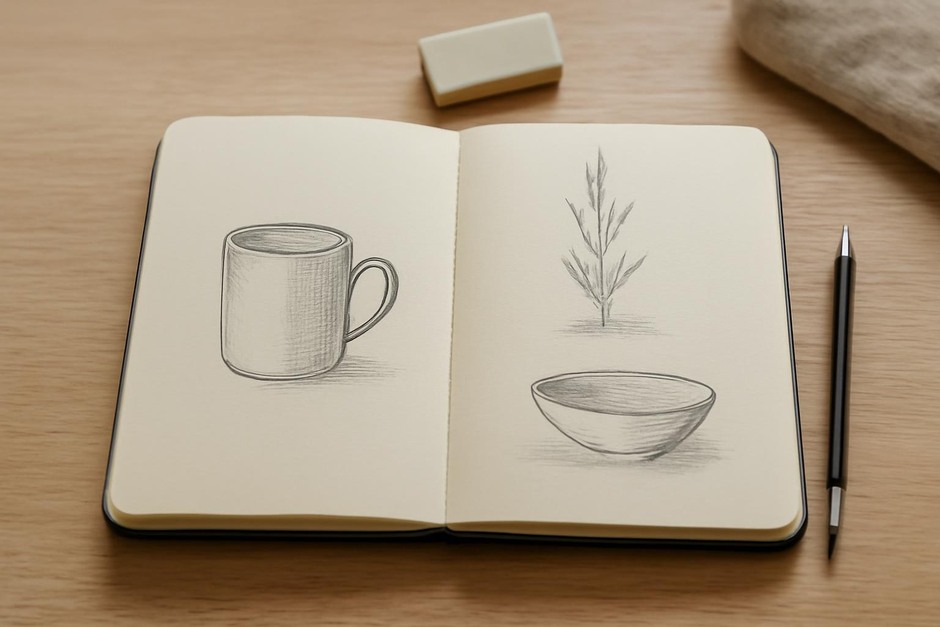
- Main study (8–20 minutes): Choose a single subject—an apple, a corner of a room, a shoe—and work steadily, focusing on relationships of proportion, value, or edge.
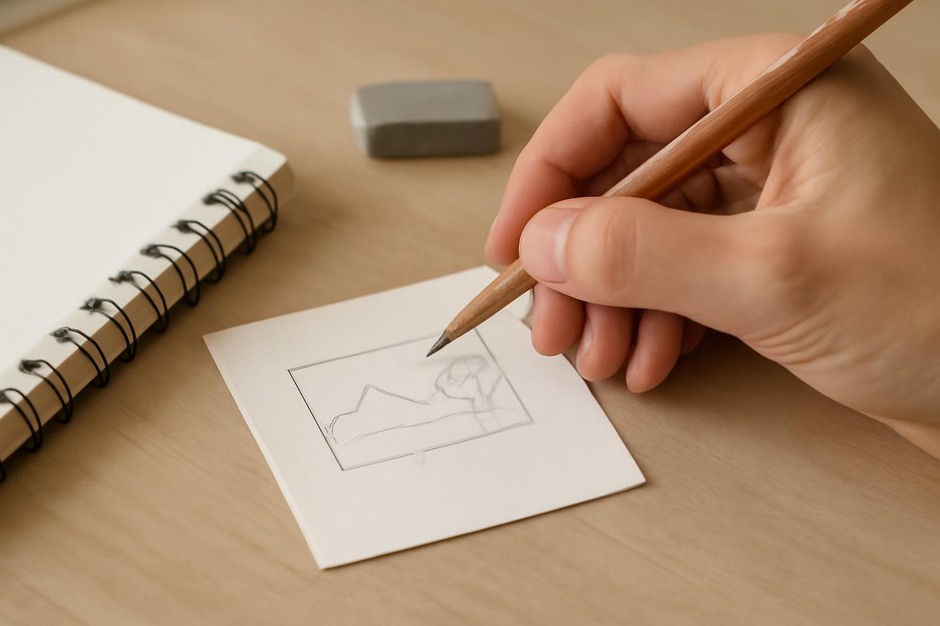
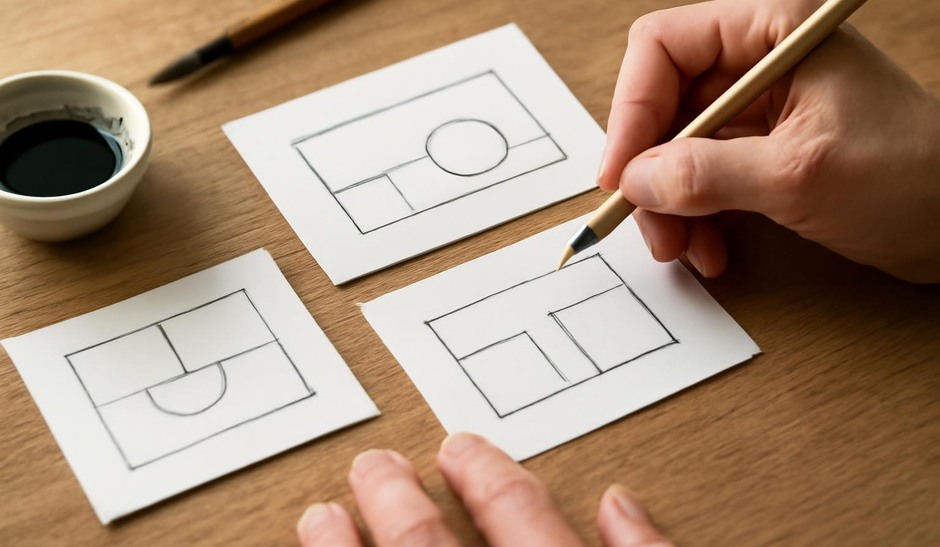
- Note and reflect (2–5 minutes): Jot a quick observation, sketch a thumbnail, or test a tone. These small notes help you remember decisions and inform future sessions.
Choose forgiving materials
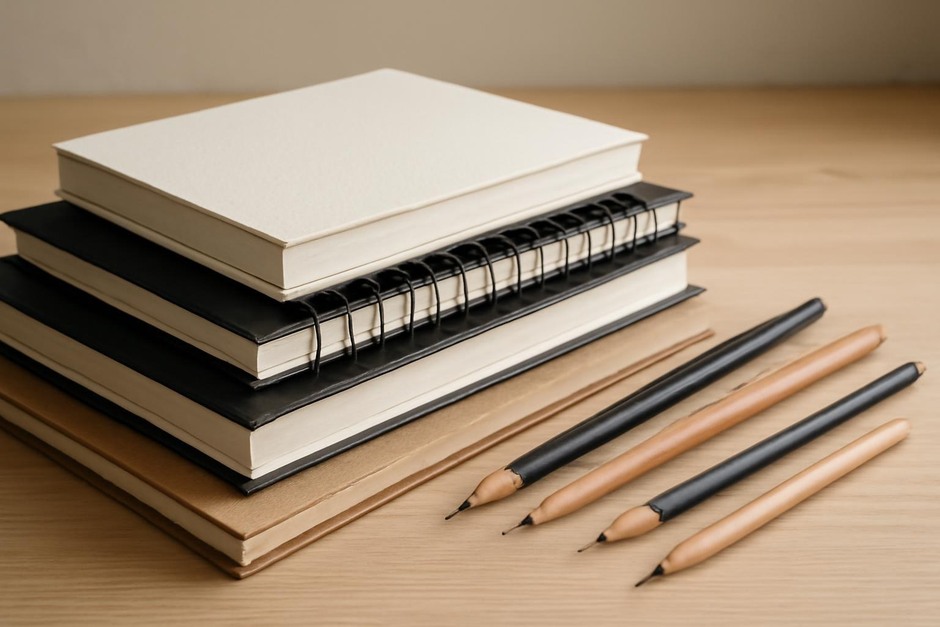
Pick tools that encourage return visits. An inexpensive sketchbook with toothy paper, a mechanical pencil, and a soft eraser are a reliable kit. If you prefer ink, use a spare page for practice strokes. The point is to avoid preciousness; when materials feel expendable, you are freer to experiment.
Make prompts that guide attention
Prompts reduce hesitation by giving you a clear focus. Rotate through a short list:
- Proportion: measure one part against another
- Edges: decide where forms meet and where they separate
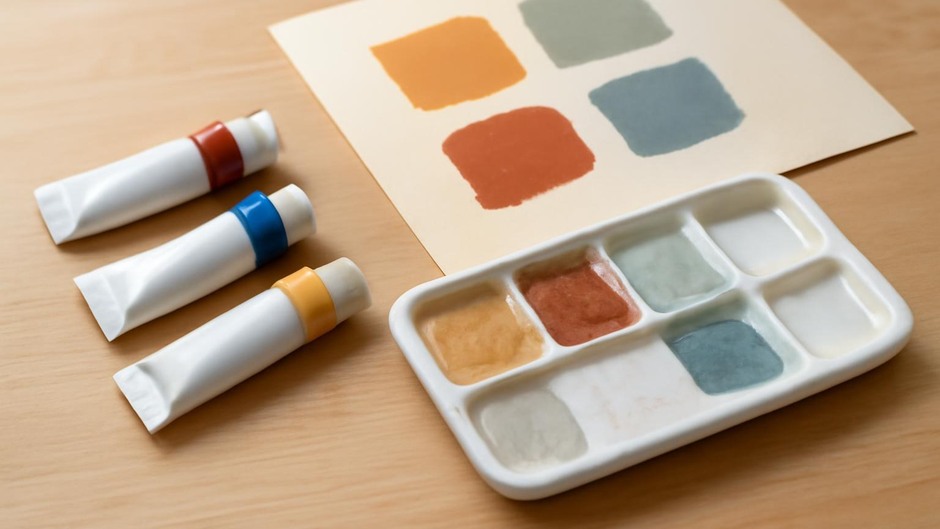
- Value: capture relative light and dark with cross-hatching or tone washes
- Gesture: rapid lines that summarize movement or posture
Use a single prompt per session to keep the task manageable and direct.
Track your progress without pressure
Record dates and a single line note about what you tried. Over weeks, patterns emerge: subjects you return to, marks that feel settled, compositions that recur. These observations are more useful than a score or ranking; they tell you what to explore next.
Adapt the routine
Routines should be flexible. If you miss a day, return without judgment. If a longer study is possible on a quiet morning, allow it. The routine acts as a spine, not a rigid rule. Its value lies in regular attention and slow accretion of experience.
Above all, keep the practice accessible. A modest, well-defined sketchbook routine cultivates both skill and permission to look closely, one small session at a time.