Choosing Paper and Pencils for Everyday Drawing
Match materials to purpose
The best materials are those you will use. A hefty sheet that you avoid because it feels intimidating is less useful than a modest sketchbook you carry everywhere. Consider how you plan to draw: quick studies, refined graphite work, or mixed-media pages. Let that purpose guide paper weight and pencil selection.
Paper tooth and weight
Tooth, the texture of paper, affects mark-making. A toothy surface holds graphite, charcoal, and pastel well; a smoother paper suits fine graphite detail and ink. Weight matters for durability: 90–140 gsm is common for portable sketchbooks, while heavier 200–300 gsm is preferable for wet media or heavier erasing. Try a few types before committing.
Paper format and binding
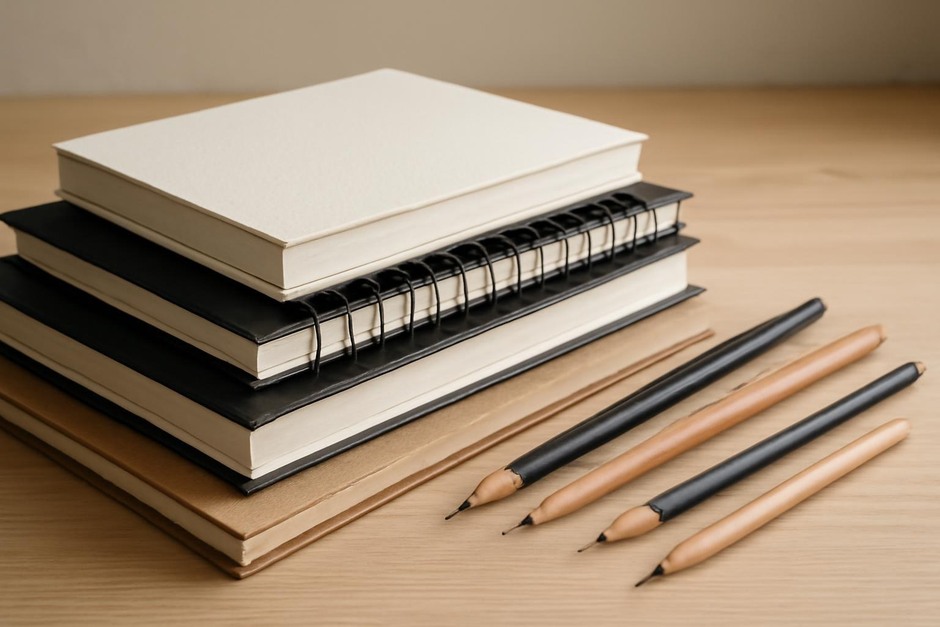
Size and binding influence use. A small, softcover sketchbook fits into a bag and lowers the barrier to draw away from home. A larger, spiral-bound book opens flat and is convenient for extended studies. Sewn bindings are durable and can handle heavier pages. Choose what fits your routine, not what looks impressive on a shelf.
Graphite grades and marks
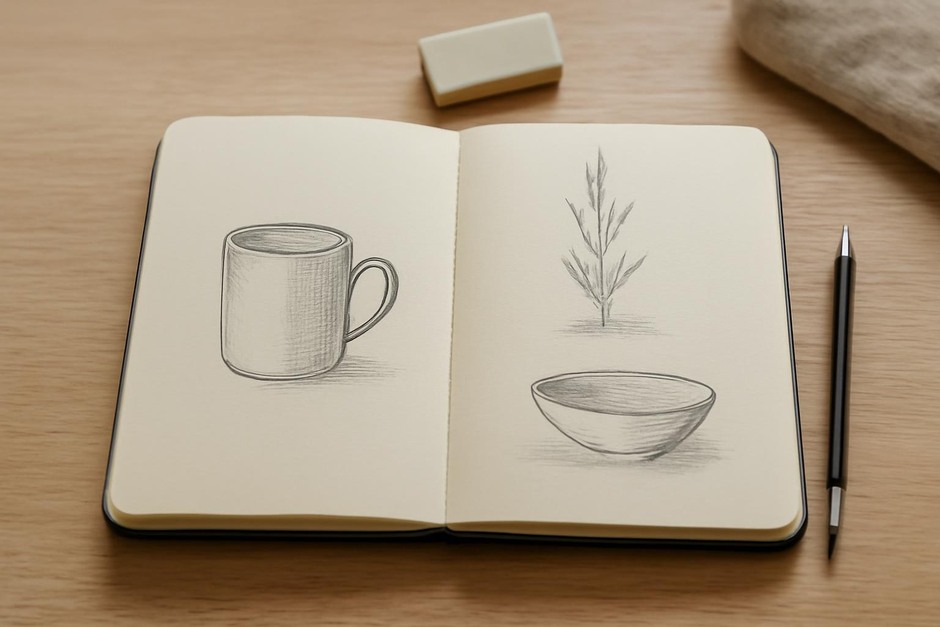
Graphite pencils range from hard (H) to soft (B). Hard pencils (2H–4H) make lighter, precise lines; soft pencils (2B–8B) produce darker, richer marks and blend easily. For a practical kit, start with a 2H or HB for structure, a 2B or 4B for mid-tones, and a 6B for deep shadows and expressive strokes. A mechanical pencil with a 0.5 mm lead is useful for consistent fine lines.
Ancillary tools
A kneaded eraser preserves paper texture and lifts tone gently. A simple soft rubber eraser is useful for clean, precise corrections. A blending stump or tortillon can unify tone but use sparingly; over-blending can flatten form. A small ruler or a cheap measuring stick aids proportion checks without formalizing every drawing.
Test, then settle
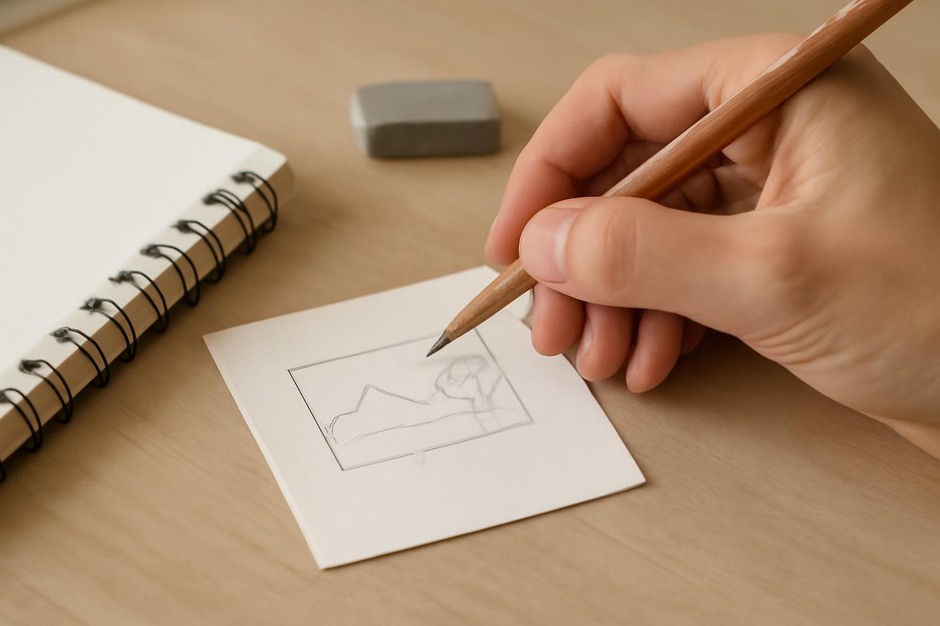
Instead of buying many materials at once, test small quantities. Buy a low-cost pad of a new paper and draw a few pages. If a surface resists the marks you want to make or a pencil feels awkward, try another. Settling on a small, reliable set of supplies supports sustained practice more than owning a large, disparate collection.
Care and portability
Protect sketchbooks from moisture and crushing by carrying them in a simple case or sleeve. Keep pencils sharpened and spare leads on hand. A modest, organized kit reduces decision fatigue and makes it easier to draw wherever you are.
Materials shape the way we perceive and record. Choose paper and pencils that invite you to return, and let experience refine your preferences over time.